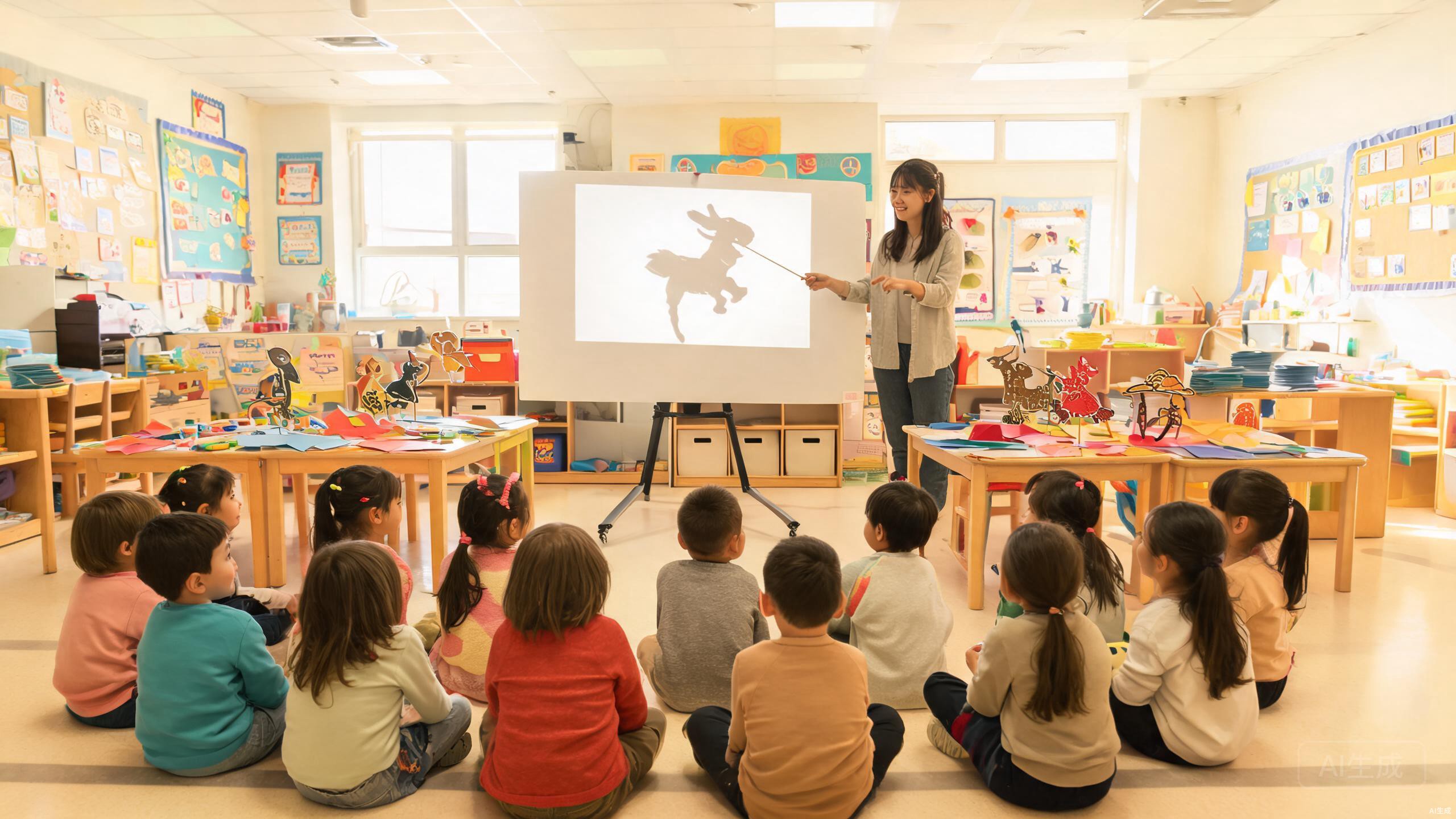
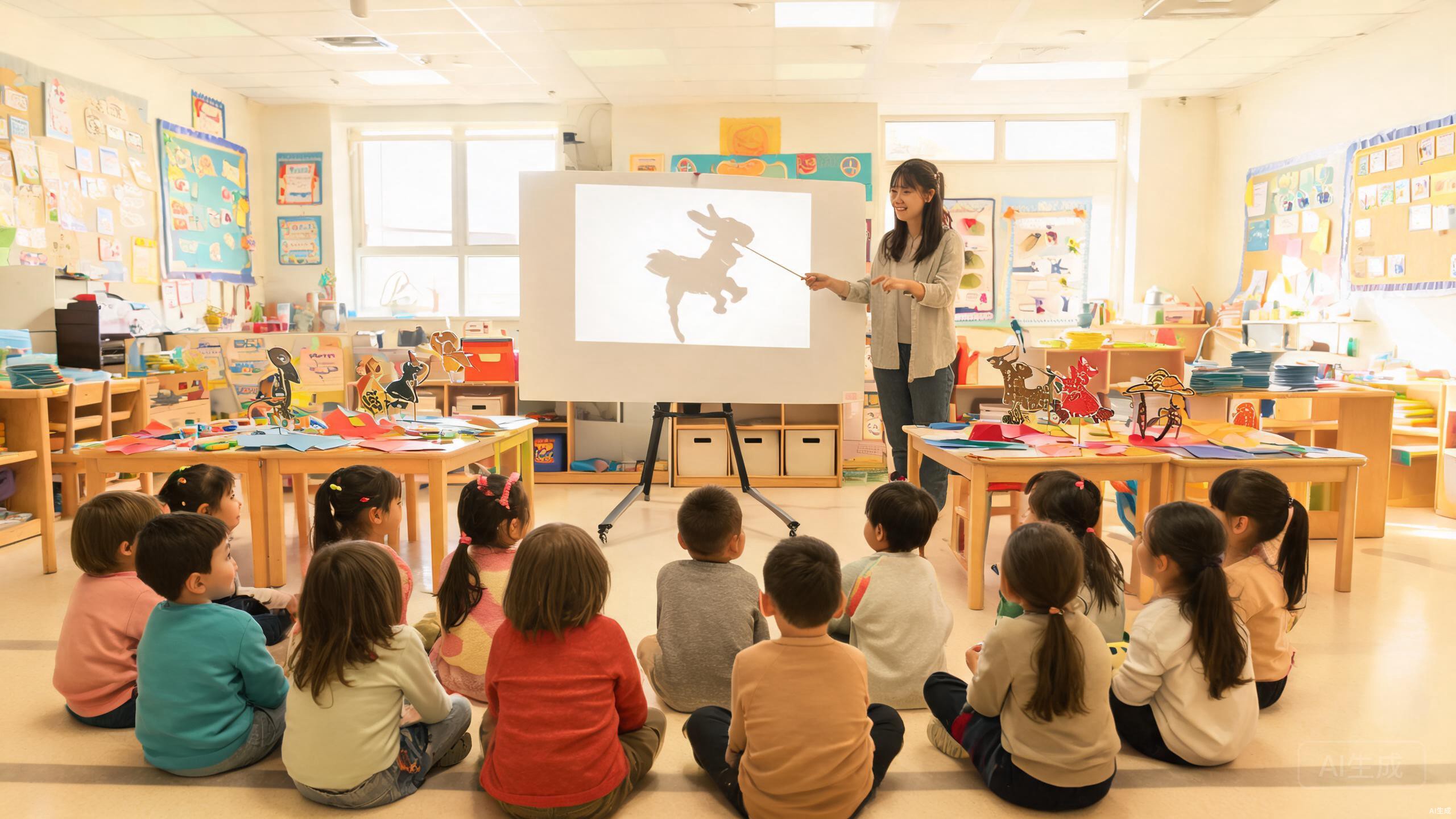
Shadow Puppet Lesson Plan for Grade 3
This 45-minute lesson plan introduces Grade 3 students to Chinese shadow puppetry, a folk art tradition with over a thousand years of history. Through a short video, a hands-on craft, and a small-group performance, students will discover how light, shadow, and storytelling combine to create magic on a simple screen. The lesson is designed for a single class period but includes extension activities that can stretch it across a week of cross-curricular exploration.
📋 Lesson Overview
Grade level: 3
Duration: 45 minutes
Subject: Social Studies / Art
Materials needed:
- Printable shadow puppet templates (one set per student)
- White cardstock or heavy paper
- Scissors (child-safe)
- Hole punch
- Brass fasteners (brads)
- Wooden craft sticks or bamboo skewers (tips blunted)
- Tape or glue stick
- A simple screen (white bedsheet, tissue paper on a frame, or a poster board)
- A desk lamp or flashlight (one per group)
- Colored markers or pencils for decoration
Learning Objectives
- Describe the historical and cultural significance of Chinese shadow puppetry, including its origins during the Han Dynasty.
- Construct a movable shadow puppet using templates, fasteners, and craft sticks.
- Explain how light and opaque objects create shadows of varying shapes and sizes.
- Collaborate with peers to plan and perform a short, scripted shadow puppet scene.
Lesson Phases
- Introduction (5 min): Show a short shadow puppet video (2–3 minutes) from a reputable cultural source. Ask students what they notice about the puppets, the light, and the screen. Record observations on the board to revisit at the end of the lesson.
- Cultural background (10 min): Present a brief history of Chinese shadow puppetry (皮影戏). Explain that the tradition began more than 1,000 years ago during the Han Dynasty and was a popular form of entertainment before movies and television. Highlight that puppeteers were highly skilled storytellers who combined music, voice acting, and intricate leather puppets. Show images of traditional carved leather puppets alongside modern paper versions.
- Craft activity (20 min): Distribute puppet templates and guide students step by step: cut out the puppet body parts, punch holes at the joints, connect parts with brass fasteners, and attach craft sticks to the limbs. Allow time for students to decorate their puppets with markers. Circulate to assist with fasteners and joint alignment.
- Performance (10 min): Divide the class into small groups of 3–4. Give each group 3 minutes to rehearse a short scene (30 seconds to 1 minute) using their puppets behind the lit screen. Each group performs once while the rest of the class watches and offers one positive observation.
Assessment
Use the following observations to assess student understanding during and after the lesson:
- Conceptual understanding: Can the student describe at least one fact about the history of Chinese shadow puppetry?
- Technical skill: Did the student successfully cut, punch, and assemble the puppet so that limbs move at the joints?
- Scientific reasoning: Can the student explain why the puppet’s shadow appears on the screen and what happens when the puppet moves closer to or farther from the light source?
- Collaboration: Did the student contribute to the group performance and listen respectfully to peers?
Differentiation
For advanced students: Challenge them to design an original puppet character rather than using a template, write a one-paragraph script for their group, or experiment with colored cellophane to create tinted shadows. They can also research and present a comparison between Chinese shadow puppetry and another tradition (such as Indonesian wayang kulit).
For struggling students: Provide pre-cut puppet parts or templates with fewer joints (head + body only). Pair them with a supportive buddy for the assembly step, and offer a sentence-starter script for the performance (e.g., “Once upon a time, a clever rabbit met a hungry tiger…”). Allow extra rehearsal time or a reduced performance length.
Extension Activities
- Science: Investigate how shadow size changes with the distance between the light source, the puppet, and the screen. Measure and record results in a simple chart.
- Language Arts: Have students write a longer script (3–5 sentences) featuring their puppet character, including a clear beginning, middle, and end.
- Music: Play a short clip of traditional Chinese shadow play music and have students perform their scenes with the accompaniment.
- Social Studies: Locate China on a world map and explore how storytelling traditions differ across regions and dynasties.
🛒 Recommended Materials
The following items pair well with this lesson plan. As an Amazon Associate, PuppetGlow earns from qualifying purchases.
Frequently Asked Questions
Do I need a professional screen for the performance?
No. A white bedsheet hung from a doorway, tissue paper stretched across a cardboard frame, or even a plain white poster board works well. The most important element is a single, bright light source positioned behind the puppets and aimed at the screen.
What if my students finish the craft early?
Have a “puppet extras” station ready with extra templates, colored cellophane for tinted shadows, or blank paper for students to design a second character. Advanced students can also begin drafting a script while waiting for the performance phase.
Can this lesson be split across two days?
Yes. A natural break point is after the craft activity. Day 1 covers the video, cultural background, and puppet construction; Day 2 focuses on rehearsal and performance, with extra time for group reflection and the extension activities.
Related Resources
Ready to extend the lesson? Explore these related collections on PuppetGlow:
- Shadow Puppet Templates — free printable puppets and jointed characters.
- DIY Theater — step-by-step guides to building your own shadow screen at home or in class.
- Chinese New Year — seasonal puppet projects tied to Lunar New Year traditions.
Have you tried this lesson plan in your classroom? Share your students’ performances with us on social media using #PuppetGlowClassroom — we love seeing young storytellers bring shadow puppetry to life.