Best Materials for DIY Shadow Puppets
Choosing the right materials makes the difference between a shadow puppet that works and one that flops. A puppet that droops, a screen that ripples, or a lamp that throws muddy shadows can turn a magical performance into a frustrating one. The good news is that you don’t need expensive specialty supplies to get crisp silhouettes and smooth, lifelike movement. You just need to understand why each material matters and how to pick the best version of it for your budget. This guide walks through every essential, a few premium upgrades worth the splurge, and a no-excuses $5 alternative for classrooms and rainy afternoons.
Essential Materials
Cardstock (65lb–110lb)
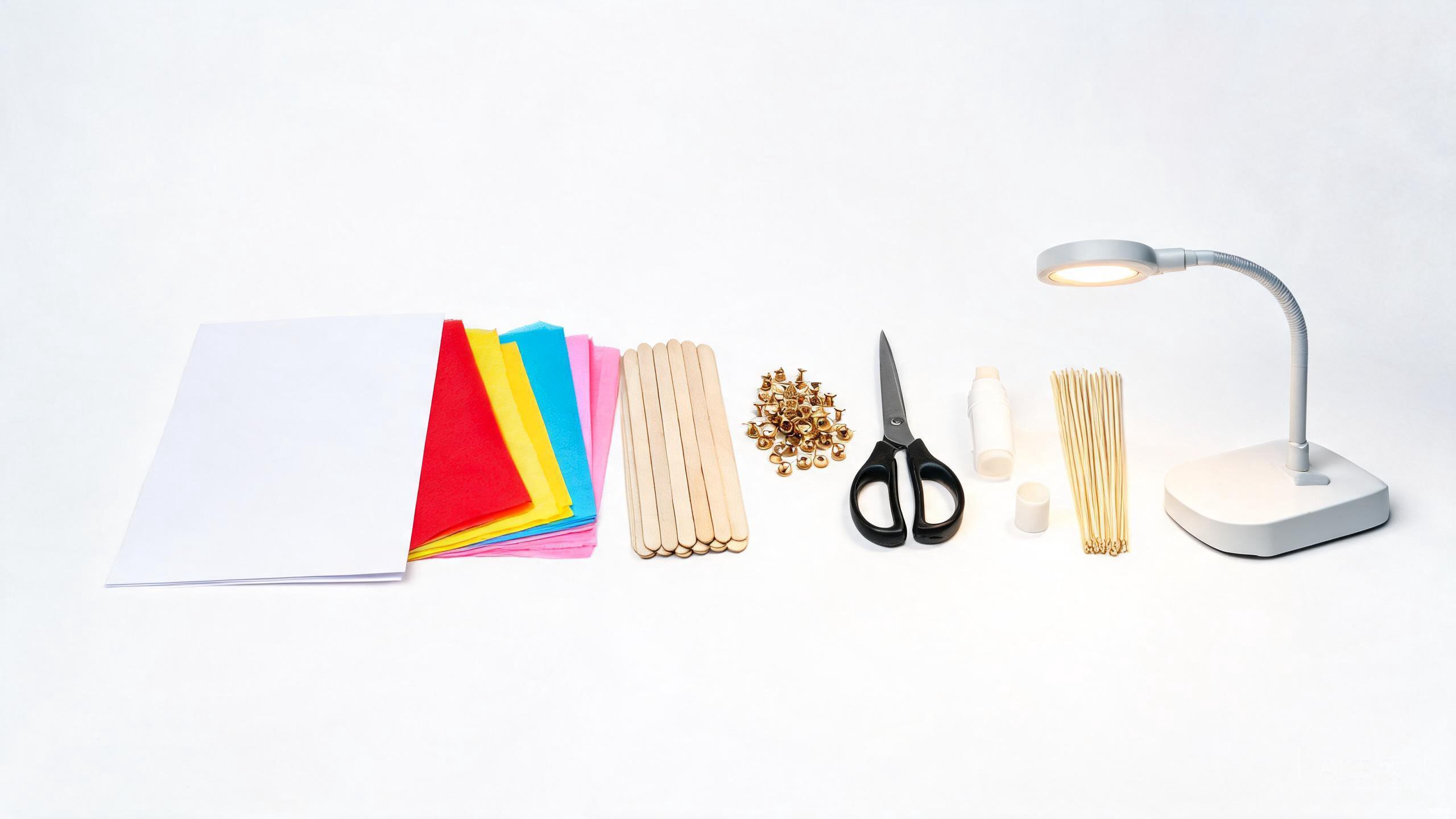
Cardstock is the backbone of every shadow puppet. Standard printer paper (20lb) is too flimsy — puppets curl, tear, and sag within minutes. Cardstock between 65lb and 110lb hits the sweet spot: rigid enough to hold a silhouette edge, yet thin enough to cut cleanly with craft scissors or a hobby knife. 65lb is ideal for younger makers and intricate articulated figures, while 110lb is better for larger scene pieces like trees, castles, or background scenery. Black or dark-colored stock produces the sharpest shadows, but white cardstock works just as well — the puppet blocks light, so only the silhouette shows.
Paper Fasteners / Brads
Brads are the joints that let your puppet wave, walk, and gesture. Look for ½-inch or 5/8-inch brass paper fasteners — small enough to fit through tight puppet joints, large enough to stay secure. Avoid the tiny ¼-inch mini brads sold for scrapbooking; they pull through cardstock under repeated movement. For best results, punch a clean hole with a single-hole punch (or a push pin in a pinch) before inserting the brad, and spread the prongs flat against the back of the puppet.
Craft Sticks / Bamboo Skewers (Control Rods)
Every puppet needs at least one control rod attached to a moving part. Wooden craft sticks (the jumbo size, about 6 inches) are perfect for hand puppets and younger performers. For finer control and longer reach, bamboo skewers trimmed to 8–10 inches are lighter and easier to maneuver. Tape the rod to the back of the puppet at a slight angle using clear tape, or hot-glue it for a permanent hold. Pro tip: a second rod attached to a limb (an arm, a wing) gives you articulated, two-handed control.
LED Lamp
Your light source is what makes the magic. A single LED desk lamp or clip light in the 600–1000 lumen range is plenty for a small home screen. Warm white (around 2700K–3000K) produces a soft, candlelit glow that suits folk tales and bedtime stories. Cool white (5000K–6500K) produces crisp, high-contrast shadows that work well for modern or spooky scenes. Avoid multi-LED “fairy” string lights as a primary source — they create overlapping shadows and blurred edges. A focused, single-bulb lamp placed 3–4 feet behind the screen gives the cleanest silhouette.
Screen Material
The screen is the canvas your shadows appear on. Three household options work well:
- Tissue paper — cheapest and lightest; tape it over a cardboard frame. Best for quick demos.
- Parchment paper (baking paper) — the sweet spot. Diffuses light evenly, resists tearing, and costs under $3 per roll.
- White cotton sheet — best for larger stages and group shows. Stretches taut over a PVC or wooden frame.
Tape and Glue
Keep both on hand. Clear tape attaches control rods and patches torn screens; glue sticks laminate layers of cardstock for thicker puppet bodies. A small bottle of white school glue or a low-temperature hot glue gun is useful for permanent joints. Avoid superglue near small puppet parts — it’s brittle and hard to reposition.
Premium Upgrades Worth the Splurge
Once you’ve mastered the basics, three upgrades dramatically elevate your puppets:
- Translucent vellum — Instead of pure black silhouettes, vellum lets you add glowing “windows” to puppet bodies (lanterns, eyes, stained-glass effects). Cut vellum to fit puppet openings and layer it between two cardstock pieces.
- Colored gels (lighting gel sheets) — Tape colored gels over your lamp or behind screen openings to create tinted shadows — a red dragon, a blue ocean, a green forest. A small sample pack covers most story moods.
- Articulated metal joints — Replace paper brads with small metal eyelets or rivets for puppets that get heavy daily use (classroom sets, museum kits). They never loosen, never tear through, and outlast dozens of cardstock bodies.
The $5 Budget Option
If you only have five dollars, head to a dollar store and grab: a pack of black construction paper ($1), a box of brass fasteners ($1), a pack of bamboo skewers ($1), a roll of parchment paper ($1), and a roll of clear tape ($1). Use a household flashlight or phone flashlight as your lamp, and a cardboard box with a rectangle cut out as your screen frame. This setup produces surprisingly clean shadows and is the perfect way to test whether shadow puppetry clicks for you before investing in better tools.
Where to Buy
- Amazon — Best for bulk cardstock, multi-size brad assortments, and LED clip lamps with adjustable color temperature. Fast shipping, easy returns.
- Craft stores (Michaels, Hobby Lobby, Joann) — Ideal for vellum, colored gels, and specialty cardstock. Watch for weekly 40%–50% off coupons.
- Dollar store alternatives — Surprise finds: parchment paper, skewers, tape, and small flashlights. Quality varies, but the price can’t be beaten for classroom bulk buys.
Recommended Products
🛒 Our Top Picks
- 📄 Neenah Cardstock 110lb, 250 Sheets (Black)
- 🔗 Brass Paper Fasteners, 5/8″ (500 Count)
- 💡 LED Clip Desk Lamp, Adjustable Warm/Cool
- 🎋 Bamboo Skewers, 12″ (1000 Pack)
- 🌈 Colored Lighting Gel Sample Pack
Disclosure: As an Amazon Associate we earn from qualifying purchases.
FAQ: Material Substitutions
Can I use regular printer paper instead of cardstock?
You can, but the puppet won’t last. Printer paper is too thin to hold a crisp edge or survive repeated handling. If cardstock isn’t available, double or triple-layer the printer paper and glue the sheets together with a glue stick — this creates a stiff laminate that holds up reasonably well for a single performance.
What can I substitute for paper fasteners if I don’t have brads?
Try a small loop of wire (a paperclip cut and bent works), a stitch of thread or embroidery floss, or even a tightly rolled piece of tape. Each option allows the joint to pivot. Avoid staples — they’re too rigid and will tear through cardstock quickly.
What’s the best substitute for a dedicated LED lamp?
A smartphone flashlight in a dark room works for small screens. For larger setups, a single bare LED bulb in a clip-on shop light (the kind sold at hardware stores for under $10) produces excellent shadows. Avoid fluorescent tubes — they flicker on camera and create uneven light bands.
Keep Going
Now that you’ve got your materials sorted, take the next step:
- Browse our printable puppet templates and start cutting.
- Build your own performance space with our DIY theater guides.
- Bring it into the classroom with ready-to-teach shadow puppet lesson plans.
The right materials turn a stack of paper and a lamp into a stage. Start simple, experiment often, and let the shadows do the storytelling.