
Mission to Story Planet Adventure Card Game
A mix-and-match storytelling game with 24 cards for ages 6-12
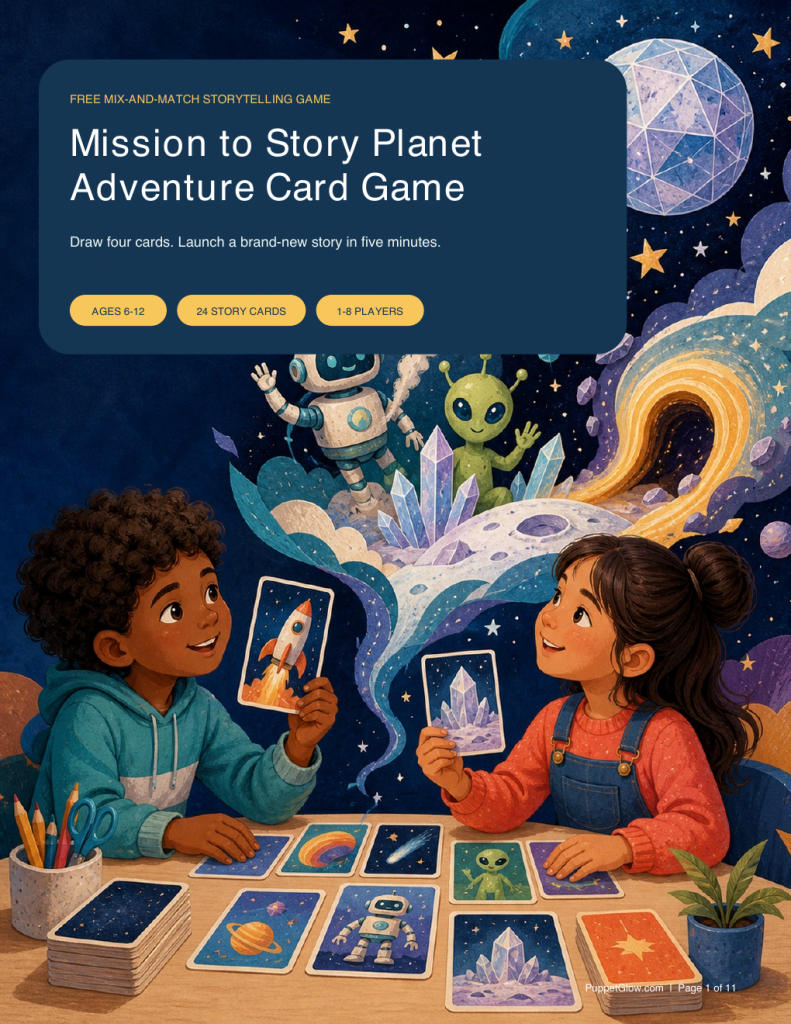
Draw four cards and launch an original adventure in five minutes - an endlessly replayable speaking and writing game for home or classroom.
Free
About This Resource
Quick answer: what is Mission to Story Planet?
Mission to Story Planet is a free eleven-page printable storytelling game for children ages 6-12. The download contains 24 illustrated cards in four categories - Hero, World, Problem, and Plot Twist - plus a quick-start guide and Story Mission Log. Players draw one card from each category and use the four ideas to create an original spoken or written story in as little as five minutes.
An endlessly replayable story generator for kids
Instead of asking children to invent a story from a blank page, the game gives them four vivid starting points. A child might draw Joke-Bot 3000, the Crystal Moon, a Backward Rocket problem, and a Kindness Ending. Another combination could pair the Shy Star Gardener with the Library at Light Speed and a mysterious Silent Signal. With 24 cards and four categories, the deck supports hundreds of combinations while preserving a simple narrative structure.
What is included in the printable card game?
- Six illustrated Hero cards with distinctive goals and personalities.
- Six imaginative World cards, including the Crystal Moon, Bottle Planet, and Doorway Comet.
- Six child-friendly Problem cards that create meaningful story conflict without frightening imagery.
- Six Plot Twist cards that encourage empathy, flexibility, audience participation, and surprising endings.
- A four-step quick-start page for individual, family, or classroom play.
- A Story Mission Log for planning the beginning, middle, difficult choice, and ending.
Who should use these story cards?
The game is designed for elementary teachers, homeschool families, parents, librarians, tutors, speech and language groups, and children who enjoy imaginative play. It works as a creative writing prompt deck, an oral storytelling game, a literacy-center activity, a classroom morning warm-up, or a screen-free family game. Emerging writers can tell the story aloud, while confident writers can use the same cards for a complete narrative.
How to play Mission to Story Planet
- Print and prepare: Print the cards on cardstock, cut along the dotted lines, and sort them into four piles.
- Draw four cards: Choose one Hero, one World, one Problem, and one Plot Twist.
- Make connections: Decide what the hero wants, why the world matters, and how the problem changes the mission.
- Tell the story: Use a clear beginning, middle, difficult choice, and ending. A spoken round can take two to five minutes.
- Remix: Replace one card and retell the story. Compare how one new element changes the plot.
- Extend: Use the Story Mission Log to turn the spoken adventure into a written story, puppet show, comic, or group performance.
Learning goals and classroom value
The card structure supports narrative planning, vocabulary, cause-and-effect reasoning, flexible thinking, descriptive language, listening, and confident speaking. The Plot Twist category encourages children to move beyond predictable endings and consider empathy-based solutions. Teachers can also use the cards to model character motivation, setting, conflict, resolution, and revision.
Five practical ways to use the deck
- Five-minute warm-up: Draw four cards and invite one student to pitch a story.
- Literacy center: Small groups complete the Story Mission Log before writing.
- Family game night: Each player adds one part of a shared adventure.
- Homeschool writing lesson: Retell the same card combination from two different viewpoints.
- Puppet theater prompt: Turn the hero and problem into a short puppet performance.
Printing and storage tips
Print at 100 percent on cardstock for frequent use, or use ordinary paper and place the cards in reusable sleeves. Lamination is optional. Store each category with a colored divider or small envelope. For younger players, read the card aloud and focus on oral storytelling. For older students, add a time limit, point of view, required dialogue, or specific genre such as mystery, comedy, or adventure.
Materials
Printer, paper or cardstock, scissors, and an optional storage envelope.
Learning Goals
Narrative structure, creative writing, vocabulary, oral language, and flexible thinking.
Resource FAQ
Questions about this printable
Is Mission to Story Planet free?
Yes. The full eleven-page printable game is free after email delivery and does not require payment information.
How many cards are included?
The game includes 24 illustrated cards: six Heroes, six Worlds, six Problems, and six Plot Twists.
What ages is the game for?
It is designed for ages 6-12. Younger children can tell stories aloud, while older children can use the cards for structured creative writing.
How many players can use the cards?
One child can play independently, or groups of up to eight can build a shared story. Teachers can also use one set with a whole class.
How long does one game take?
A quick spoken story takes about five minutes. A complete writing or performance activity can take 20-45 minutes.
Can I use the cards in a classroom literacy center?
Yes. The cards are suitable for writing centers, speaking and listening practice, morning warm-ups, tutoring, homeschool, and library programs.
Do the cards need to be laminated?
No. Cardstock is enough for normal use. Lamination or reusable sleeves can make a classroom set last longer.
What skills does the game support?
It supports narrative structure, vocabulary, cause and effect, flexible thinking, creative writing, oral language, and collaboration.
Learning paths
Explore related puppet learning ideas
Related Resources
 Free Printable
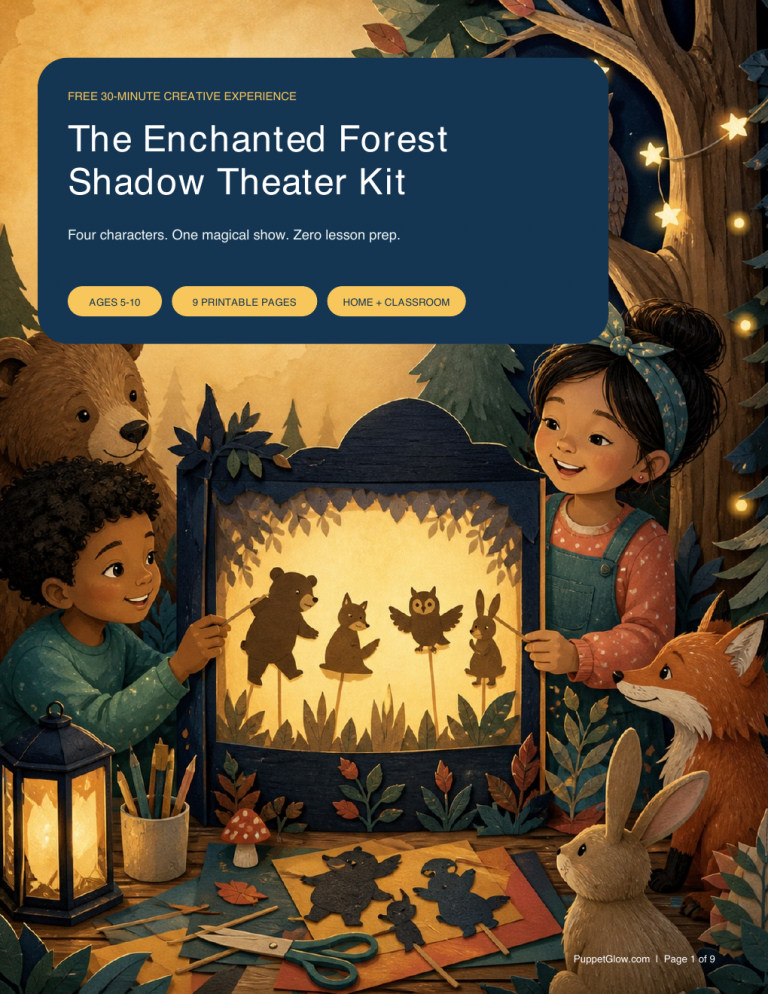
The Enchanted Forest Shadow Theater Kit
A complete 30-minute printable theater experience for ages 5-10
Turn an ordinary afternoon into a magical woodland performance - with four ready-to-cut characters, story quests, a stage guide, and zero lesson…
 Premium Printable
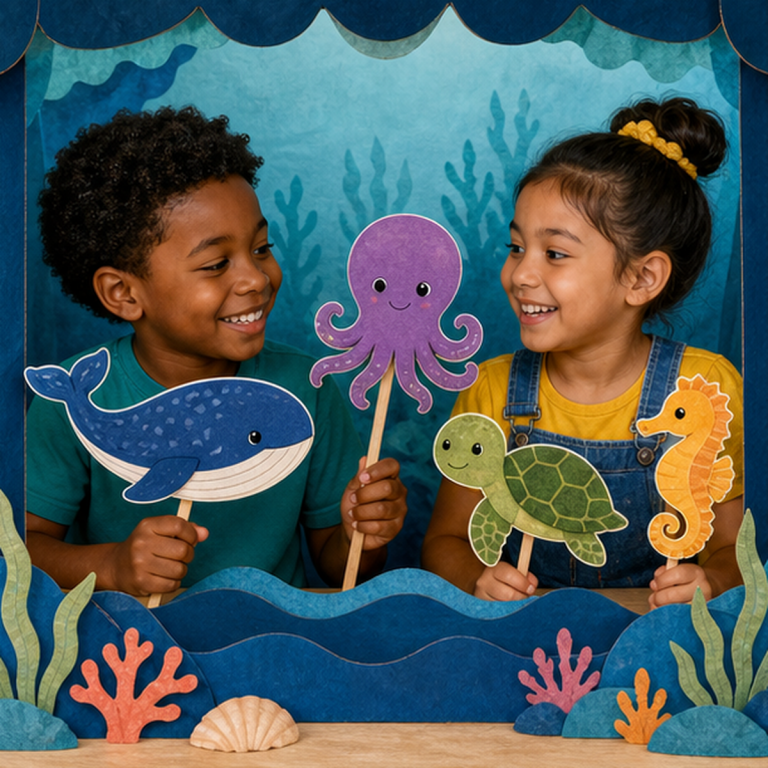
Ocean Friends Puppet Craft & Story Kit
A complete 17-page illustrated ocean puppet adventure for ages 4-9
Build six ocean friends, explore marine habitats, and guide children from hands-on craft to a meaningful underwater story.
 Premium Printable
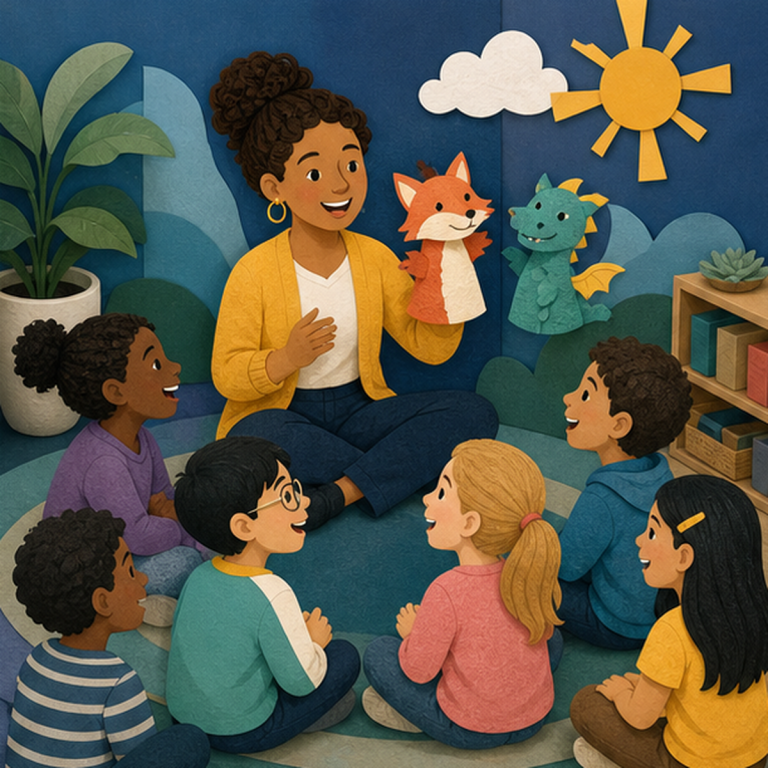
Classroom Storytelling Lesson Plan Bundle
A teacher-ready 17-page illustrated pathway from story circle to final performance
Save planning time with structured lessons, group roles, story cards, rehearsal routines, feedback prompts, and a reusable assessment framework.
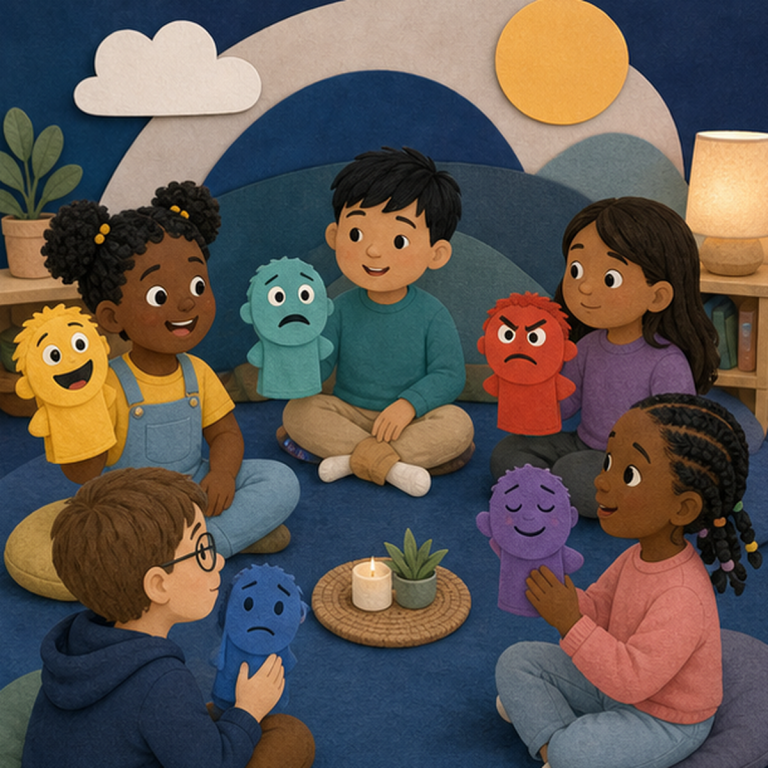 Premium Printable
Big Feelings Puppet SEL Toolkit
Eight emotion puppets and guided stories for naming, calming, and repairing
Give children a safer way to explore joy, worry, anger, sadness, pride, surprise, calm, and hope through guided puppet conversations.
Launch a New Story in Five Minutes
Get all 24 cards plus the Story Mission Log delivered to your inbox. One download creates hundreds of possible adventures.