
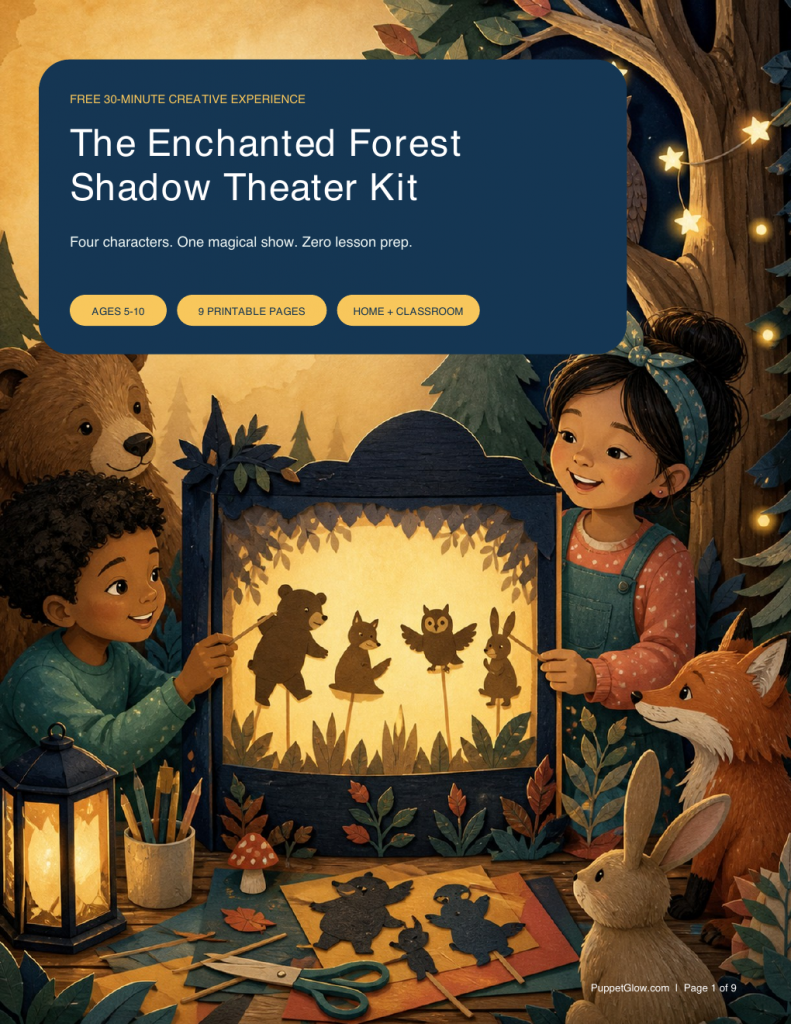
The Enchanted Forest Shadow Theater Kit
A complete 30-minute printable theater experience for ages 5-10
Turn an ordinary afternoon into a magical woodland performance - with four ready-to-cut characters, story quests, a stage guide, and zero lesson prep.
Free
About This Resource
Quick answer: what is the Enchanted Forest Shadow Theater Kit?
The Enchanted Forest Shadow Theater Kit is a free nine-page printable activity for children ages 5-10. It includes four woodland shadow-puppet characters, a safe tabletop theater guide, four story quests, performance roles, and an after-show reflection sheet. Most families and classrooms can prepare and perform the activity in about 30-45 minutes using a printer, paper, scissors, tape, craft sticks, and a cool LED lamp.
A complete puppet activity, not just a craft template
Many printable shadow puppets stop after the cutting step. This kit continues from making to imagining, telling, and reflecting. Children first create Brave Bear, Clever Fox, Wise Owl, and Bouncy Rabbit. They then choose a story mission, assign performance roles, rehearse a short scene, and share the final show with an audience. The structure helps adults lead a meaningful creative activity without writing a lesson plan from scratch.
What is included in the free download?
- A premium illustrated cover and one-page quick-start guide.
- Four full-size printable shadow-puppet templates with color character references.
- A visual guide for creating a simple cardboard-box or doorway theater.
- Four illustrated story quests: The Stolen Starlight, The Bridge of Whispers, The Tiny Roar, and The Last Golden Leaf.
- A show-host sheet with cast roles, an opening prompt, and reflection questions.
- US Letter PDF pages designed for home printers and classroom preparation.
Who is this printable for?
This resource works well for parents seeking a screen-free afternoon activity, elementary teachers planning a literacy or drama center, homeschool families exploring narrative skills, librarians leading a creative story hour, and small-group educators supporting confident speaking. Younger children may need adult help with cutting. Older children can extend the activity by writing dialogue, adding scenery, or directing a longer performance.
How to use the shadow theater kit
- Print: Print the character templates at 100 percent on cardstock or standard paper reinforced with tape.
- Make: Cut around each dotted line and attach a craft stick or paper straw to the back.
- Build: Tape white paper across a cardboard-box opening and place a cool LED lamp behind the puppets. Never use a candle or hot exposed bulb.
- Choose: Select one illustrated quest and decide who will narrate, perform, and create sound effects.
- Tell: Rehearse a beginning, problem, choice, and ending, then perform for family members or classmates.
- Reflect: Ask what changed for the characters and which choice showed courage, kindness, or cooperation.
Skills children practice
Shadow-puppet storytelling combines fine-motor work with oral language, narrative sequencing, listening, collaboration, and expressive performance. Because the characters and quest are already prepared, children can spend more energy making creative decisions. The activity is especially useful for children who find a completely blank writing prompt intimidating but respond well to visual characters and a clear story problem.
Ideas for home, classroom, and homeschool use
At home, use the kit as a weekend craft, rainy-day activity, family performance night, or quiet alternative to screen time. In a classroom, place the templates in a literacy center, divide students into casts of three to six, or use one quest as a speaking-and-listening lesson. Homeschool families can connect the activity to animal habitats, light and shadow science, creative writing, or social-emotional discussions about teamwork.
Printing and preparation tips
For stronger puppets, print on 65-80 lb cardstock. Black cardstock creates the clearest shadow, while the included printed silhouettes also work on ordinary white paper. Keep the puppet between the LED light and screen, and move it closer to the screen for a sharper shape. Store finished characters in a labeled envelope so the activity can be reused with a different story quest.
Materials
Printer, cardstock, scissors, tape, craft sticks or straws, and a lamp.
Learning Goals
Confident speaking, story sequencing, expressive language, collaboration, and creative problem-solving.
Resource FAQ
Questions about this printable
Is the Enchanted Forest Shadow Theater Kit really free?
Yes. The complete nine-page PDF is free after email delivery. No payment information is required.
What ages is this shadow puppet activity for?
It is designed for ages 5-10. Children ages 5-7 may need adult help with cutting, while older children can write extra dialogue and scenery.
What comes in the printable PDF?
The download includes four puppet templates, color character references, a visual stage guide, four illustrated story quests, performance roles, and a reflection sheet.
How long does the activity take?
Most groups need 30-45 minutes for cutting, setup, rehearsal, and a short performance. The puppets can be reused for longer lessons.
Do I need a special shadow theater?
No. A cardboard box, doorway, or blank wall can work. Use white paper or thin fabric as a screen and a cool LED lamp as the light source.
Can teachers use this in a classroom?
Yes. It is designed for family and classroom use and works well in literacy centers, drama lessons, libraries, and small groups.
Is the file A4 compatible?
The PDF is formatted for US Letter. Most printers can scale it to A4 using Fit to Page without affecting the activity.
What learning skills does it support?
It supports story sequencing, oral language, collaboration, expressive speaking, fine-motor practice, and creative problem-solving.
Learning paths
Explore related puppet learning ideas
Related Resources
 Free Printable
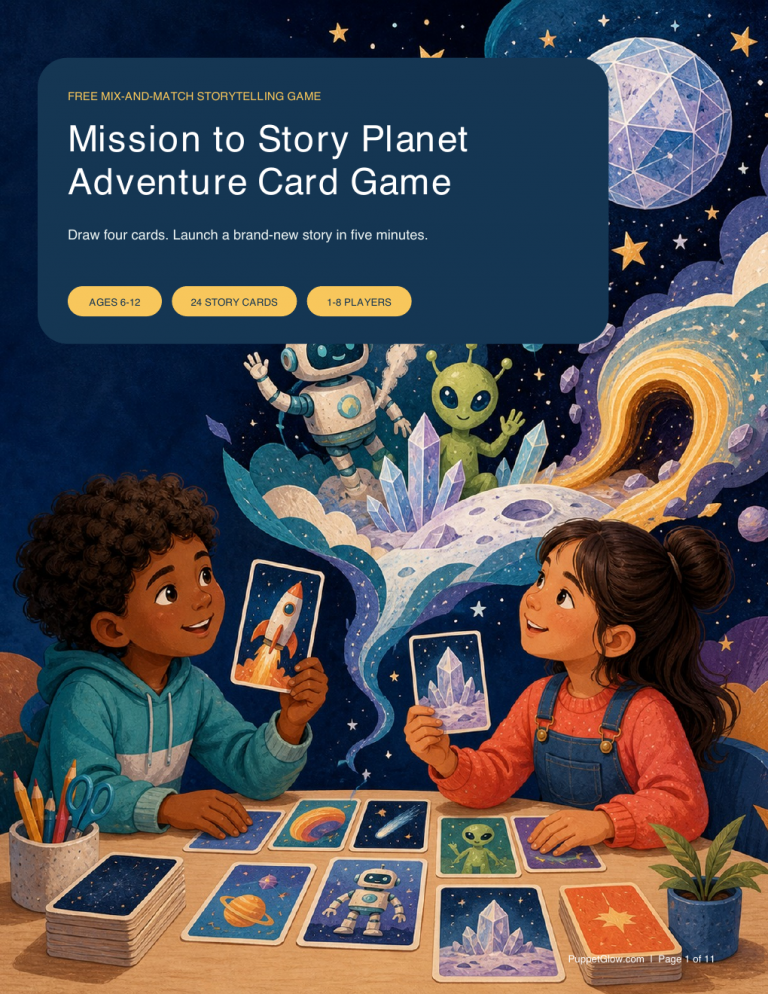
Mission to Story Planet Adventure Card Game
A mix-and-match storytelling game with 24 cards for ages 6-12
Draw four cards and launch an original adventure in five minutes - an endlessly replayable speaking and writing game for home or…
 Premium Printable
Ocean Friends Puppet Craft & Story Kit
A complete 17-page illustrated ocean puppet adventure for ages 4-9
Build six ocean friends, explore marine habitats, and guide children from hands-on craft to a meaningful underwater story.
 Premium Printable
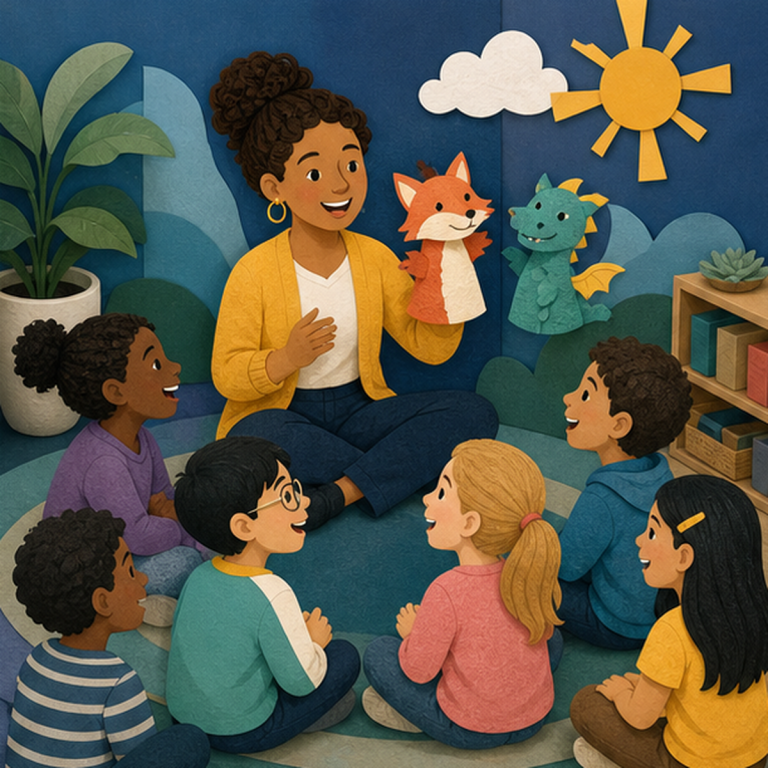
Classroom Storytelling Lesson Plan Bundle
A teacher-ready 17-page illustrated pathway from story circle to final performance
Save planning time with structured lessons, group roles, story cards, rehearsal routines, feedback prompts, and a reusable assessment framework.
 Premium Printable
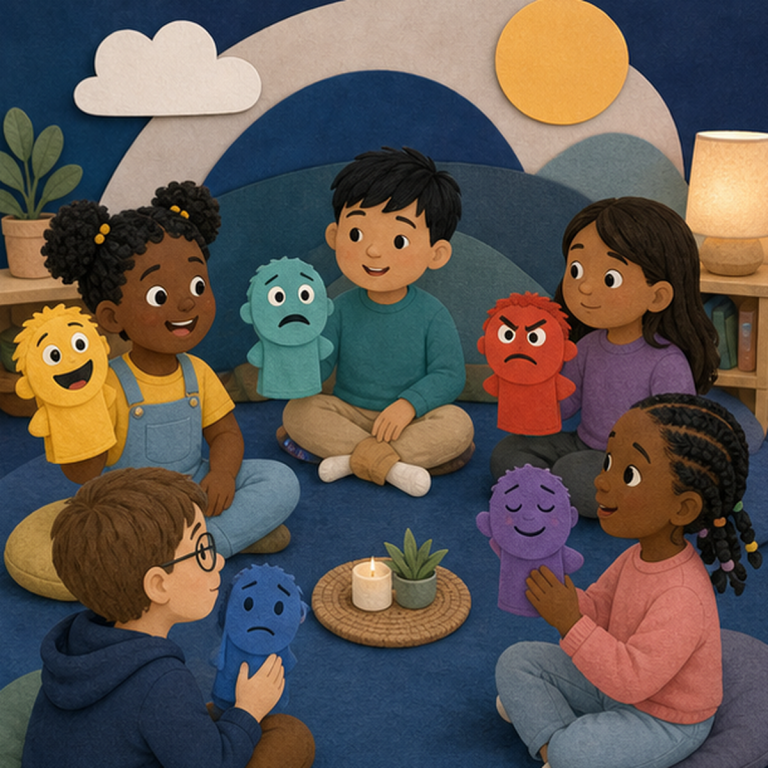
Big Feelings Puppet SEL Toolkit
Eight emotion puppets and guided stories for naming, calming, and repairing
Give children a safer way to explore joy, worry, anger, sadness, pride, surprise, calm, and hope through guided puppet conversations.
Bring the Enchanted Forest to Life
Get the complete 9-page theater kit delivered to your inbox. Print today and perform your first show in about 30 minutes.